
Where to Start
Looking for the most appropriate Primary or Secondary School for your Neurodiverse child can be really challenging for parents, guardians or carers.
Your Early Childhood Centre, education department, online searchers or community Facebook groups are places you can start your search in your local area. Of course, word of mouth recommendations from parents at the schools you're considering is also recommended. (Extend this search for outside your local area).
Research Projects and Studies on Autism and Education

Amaze Australia undertook some (first of its kind) research projects and studies with regards to Community Attitudes and Behaviours Towards Autism to identify community attitudes and behaviours relating to autism. Areas that were investigated were 'What do Australians know about Autism and Education?' and 'Experiences of Autistic People and their Families Survey'.
One of the key outcomes of this research is to better understand the attitudes and behaviours of the community and establish a baseline from which we are able to track changes over time to measure progress against Amaze’s strategic outcomes.
In addition to this, Do One Thing for Autism, developed specific targeting guides for families and educators about supporting Autistic students at school based on adjustments reported vs adjustment suggestions from real Autistics and their lived experiences.
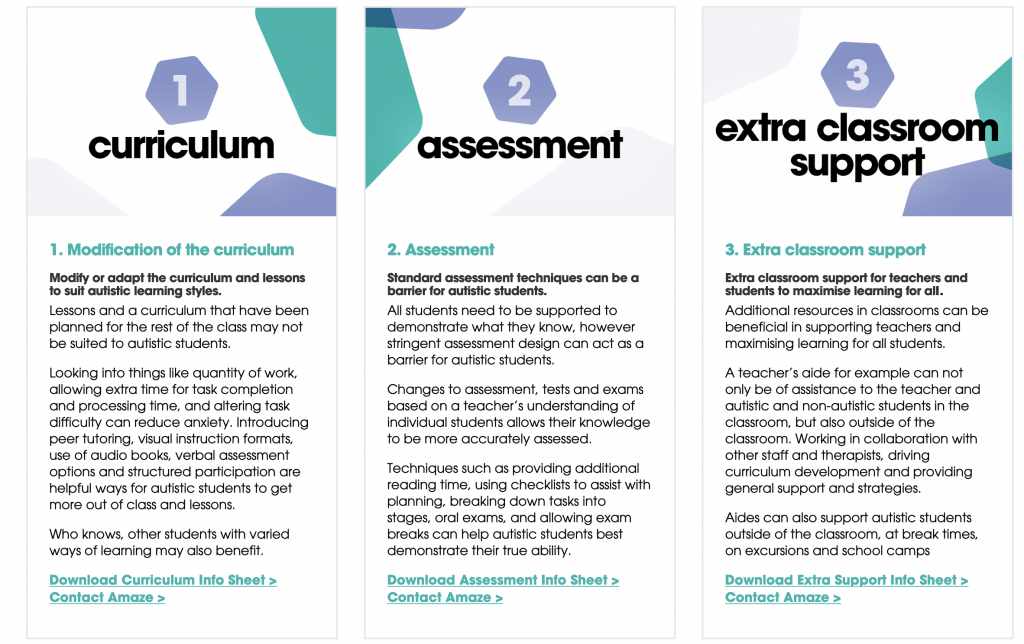
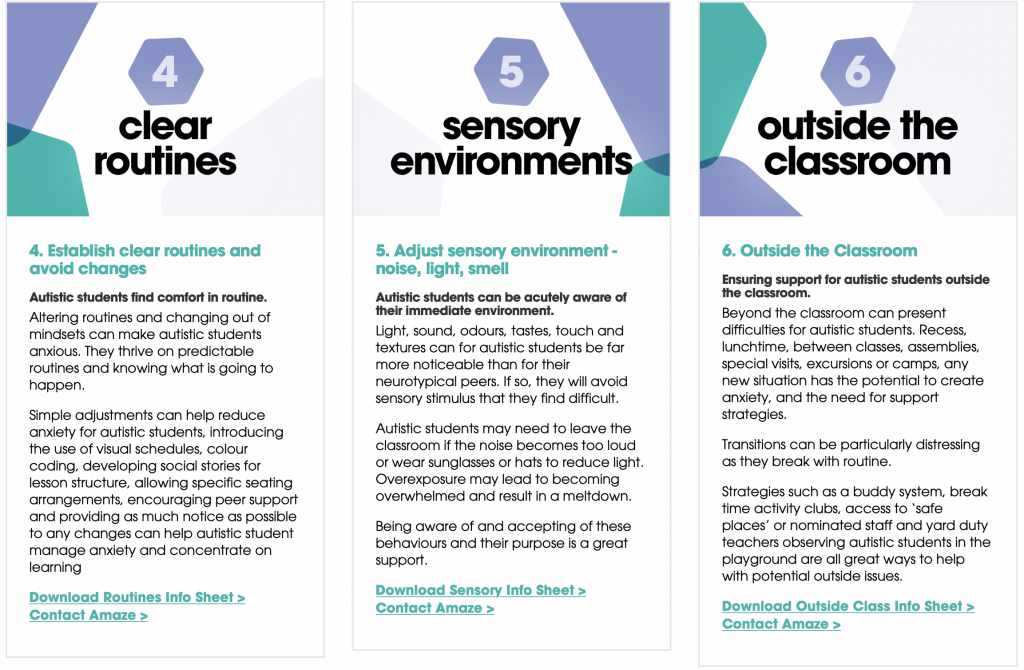
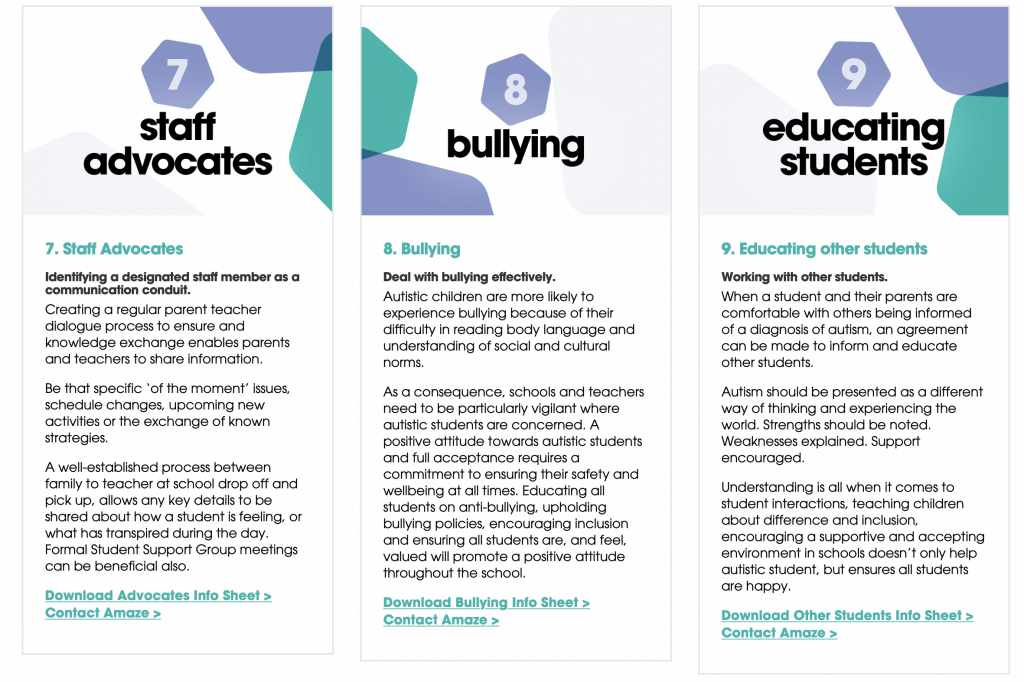
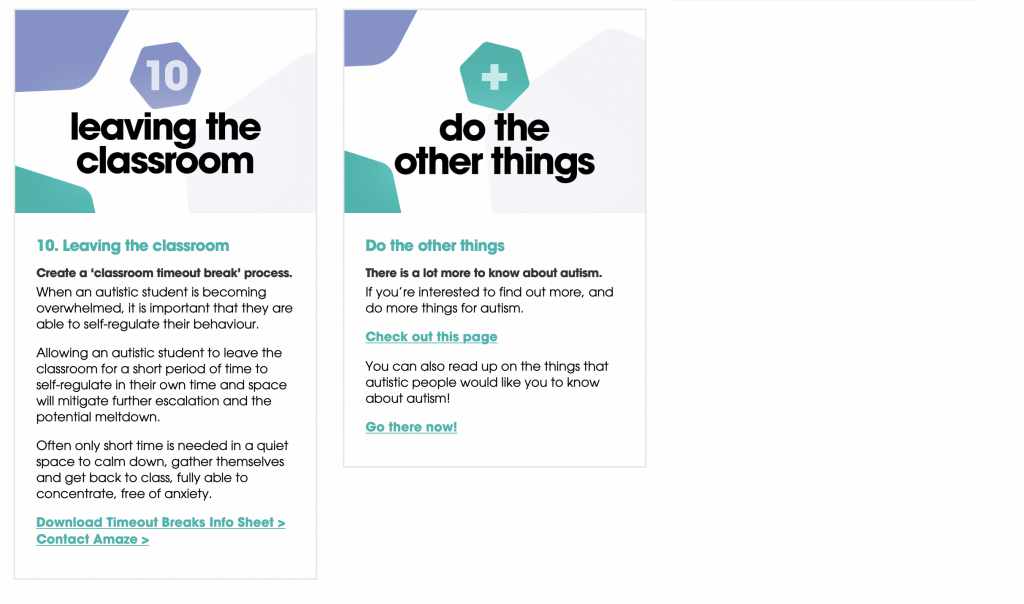
Literally Ausome Suggestions and Checklist when Choosing the Right School for your Child/ren
Once you’ve made a list of schools you’re interested in, school open days, tours and private visits will give you a feel for schools. It can help to take a friend or support person with you, so you can both gather information and discuss it afterwards.
You’ll get some sense of whether the school might be right for your child from the:
- welcome you and your child get
- the principal’s/vice principal's approach to supporting children with a disability and other additional needs
- the principal’s/vice principal's responses to your questions
school’s approach to education, diversity and inclusion - meeting the well-being team and listening to their support approaches
- and, experiences of other families.
It’s a good idea to have a look at the school's policy documents (which are usually on their school websites and easily accessible), or request them when meeting with them and pay particular attention to their emergency procedures, management of medical conditions, bullying, attendance and student engagement.
Check whether policies cover the needs of children with additional needs and ensure children’s inclusion in all aspects of school life.
If possible, try to look into some classrooms and be around the playground at lunch or break time. This will give you an idea of how children behave towards each other and how teachers guide children’s behaviour and interactions.
As mentioned here, The DSE (2005) list the legal obligations of all schools. This DSE Fact Sheet gives a great summary of what schools are legally required to do and provide our children. Schools must:
- Consult with students and/or their parents;
- Make reasonable adjustments; and
- Prevent victimisation and harassment (bullying).
- Does the school put in place the DSE and how do they follow them?
- Can the school arrange additional transition days or times to assist with moving from Primary to Secondary school?
- Does the school have a video of their campus for your child to watch however many times they need before starting at the school? (Covid lockdowns have created the need and really benefitted our children).
- Does the school provide aides for Autistic students? If so, how many hours per day?
- Is there a staff advocate for Autistic students?
- What is the bullying policy?
- What does the school do to ensure that Autistic children are not targeted for bullying?
- How does the school promote Autism acceptance around the school?
- How does it do this with teachers?
- How does it do this with students?
- Does the school change or adjust lessons for Autistic students if needed
-
- Who would do this?
- How would they do it?
- Will SSG's occur each term?
- Who will be present at these meetings?
- Will your child be provided with an ILP as a result of the SSG?
- How are the student ILPs developed?
- Are parents involved in the process?
- Do parents get a copy of the ILP?
- Are the student's reports and assessments marked according to the ILP?
- What support does the school provide around assessment? For example, breaking down tasks into steps, allowing extra reading time, etc.
- How does the school ensure that all the student's teachers are aware of their ILP, as well as their social, emotional, communication and academic requirements?
- E.g. Will your child's teacher know when your child is in shutdown and know how to support them at the time?
- Does the school use visual instruction formats?
- Does the school reduce homework, if necessary?
- Are children able to leave the classroom if the environment becomes overwhelming?
- What adjustments does the school make to avoid sensory overstimulation?
- Are quiet spaces provided in classrooms?
- Are they provided elsewhere in the school?
- How does the school support the emotional and behavioural self-regulation of students?
- Does it encourage students to take timeout breaks in the classroom?
- Does it allow students to leave the classroom if necessary?
- What support does the school provide around routine?
- How do students transition from one activity to another in the classroom?
- Does the school support Autistic students when Casual Relief Teachers replace classroom teachers?
- What is the process for when teachers are away?
- If planned leave, will your child be advised ahead of time?
- How does the school support children with school refusal?
- Do they work with the family to create a unified plan or expect the family to work alone with little to no support from the school?
- What support does the school provide outside the classroom? E.g. Are there lunchtime clubs?
- Will the school start a club around your child’s particular interest?
- Does the school have safe places for Autistic students during break times?
- Do staff members help Autistic students to join in with group activities?
- Amaze has an Information Sheet about choosing a mainstream school.
- The Autism Education Trust (UK) has a great guide to finding a school for your autistic child.
- The Association for Children with a Disability has a fact sheet on choosing a school.
- The Raising Children Network has pages on choosing primary schools for Autistic children and choosing secondary schools for Autistic children.
Your Literally Ausome
Friendship Guide
A Guide to Understanding and Supporting
your Autistic Friend.