

What is Executive Functioning?
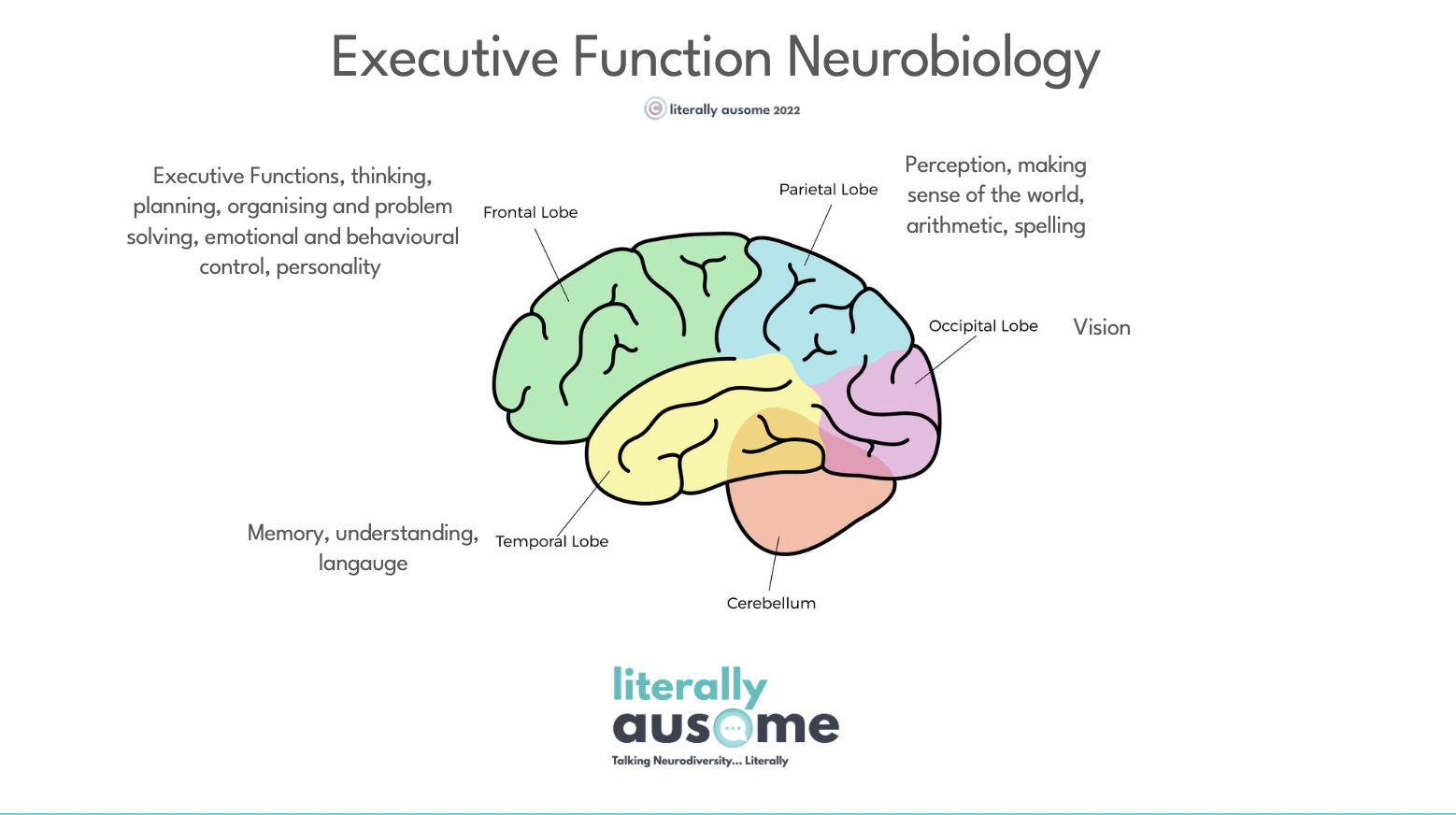
Executive Function is described as ‘the CEO of the brain’, where mental skills consolidate to help us get things done.
When children struggle with these executive functioning skills, it has a direct impact on their learning. Many children have issues with processing information and executive functioning.
The three main areas of executive function are:
- Working memory
- Cognitive flexibility (also called flexible thinking)
- Inhibitory control (which includes self-control)
Executive function is responsible for a number of skills, including:
- Paying attention
- Organising, planning and prioritising
- Starting tasks and staying focused on them to completion
- Understanding different points of view
- Regulating emotions
- Self-monitoring (keeping track of what you’re doing)

Executive function develops over time so children may struggle in different ways and at different stages.
- Frustration
- An inability to ask for help
- Difficulty following directions
- Frequent tantrums over minor things
Insistence on doing things in a particular way - Inattentiveness
- Difficulty to start a task and/ once started, a difficulty to complete the task
- Easily distracted
- Mixing up school assignments
- Disorganisation such as bringing home the wrong books or resources
- Messy desk and/or schoolbag
- An inability to focus on the main idea of a discussion.

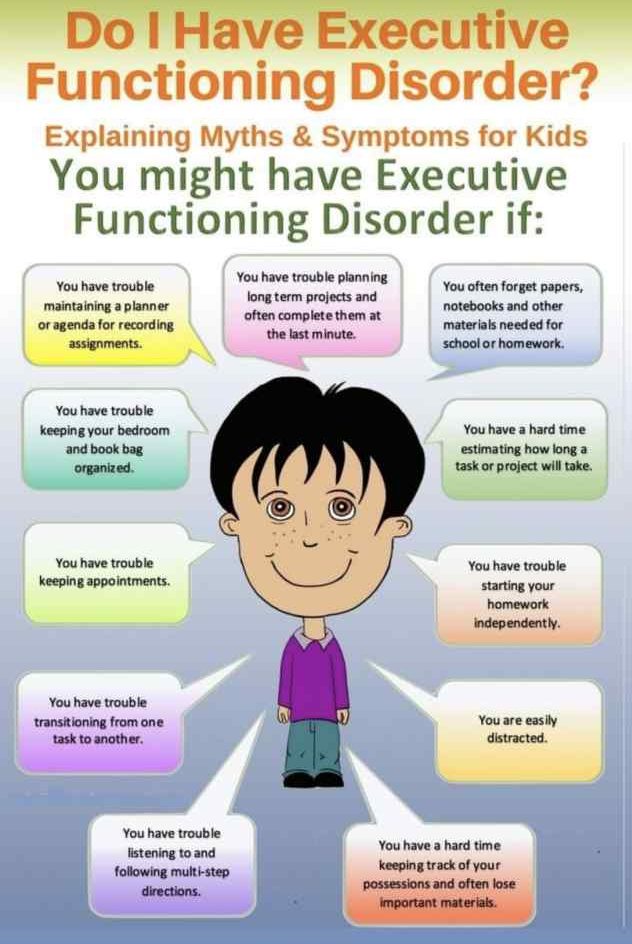
Source: Good Sensory Learning
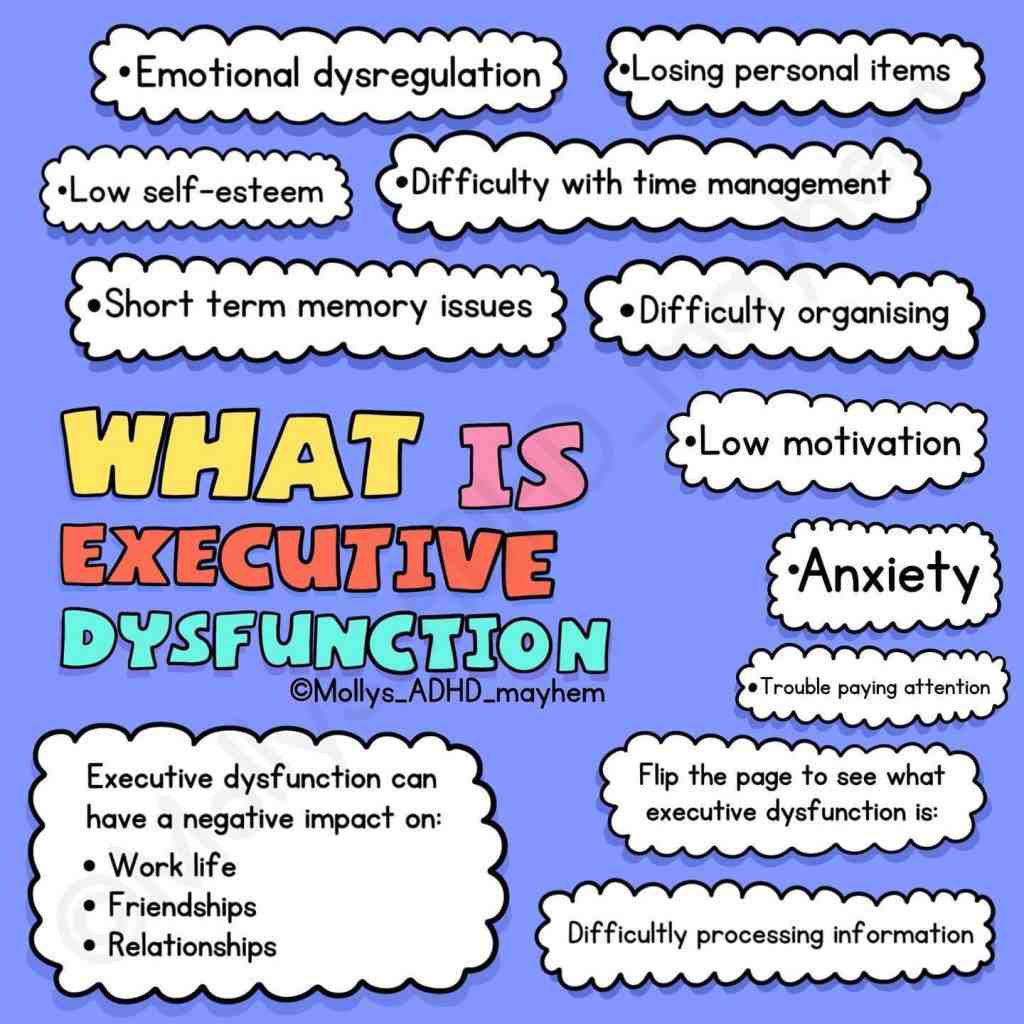
Source: @mollys_adhd_mayhem, 'What is Executive Dysfunction'
Executive Dysfunction and Neurological Conditions
Often Autistic children and those with ADHD and/or learning difficulties have tremendous difficulties starting, planning and completing work and are likely to procrastinate to avoid tasks.
This can result in disruptive, challenging and avoidant behaviours and difficulty with emotional regulation which appears to be a behavioural issue, but in reality, is a neurological one.

Supporting Executive Dysfunction - Children and Tweens

Supporting Executive Dysfunction - Teens, Young Adults and Adults
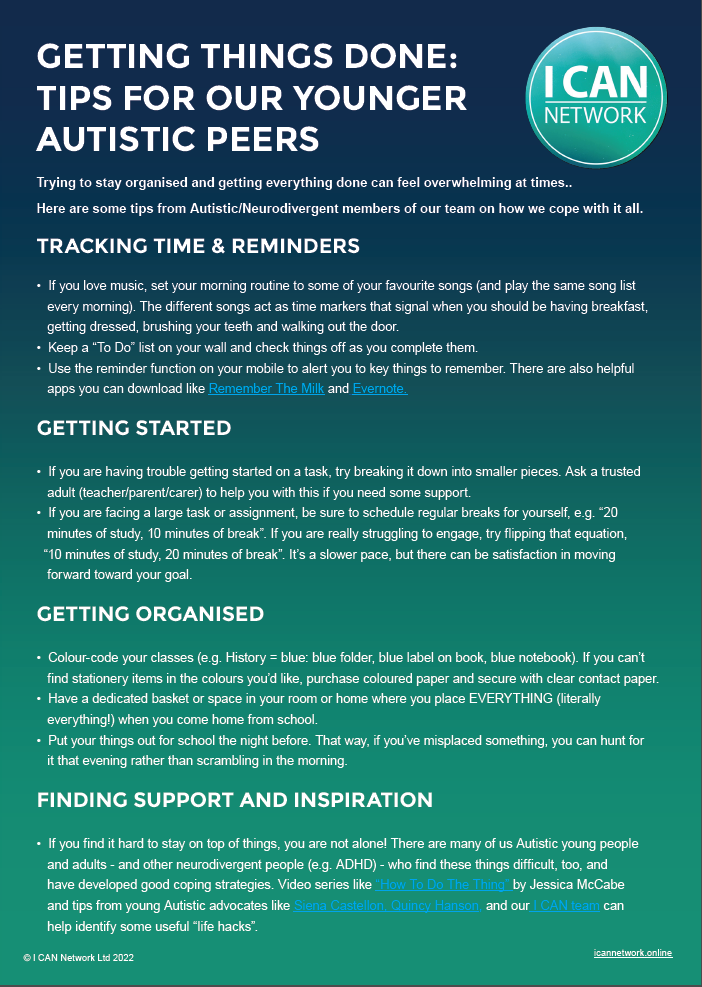
Click on the images below to download the I CAN Network Executive Functioning resources
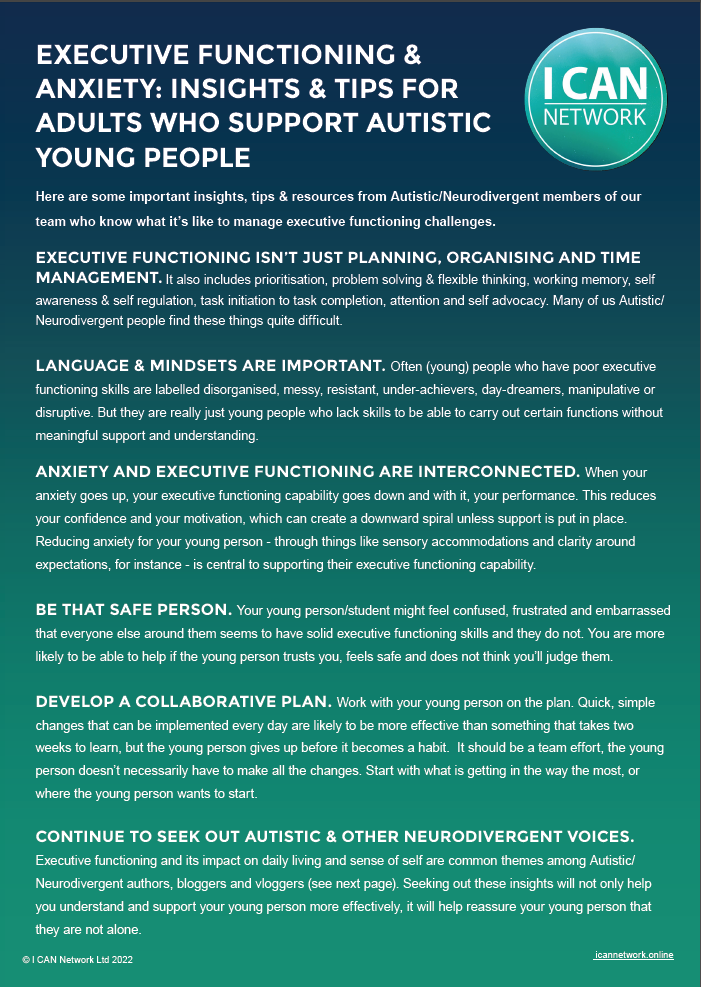
More